
How to Use Foam Adhesive For Styrofoam: Step by Step Tutorial

Installing styrofoam insulation (EPS) is one of the most effective ways to improve a building’s energy efficiency. Today, many contractors choose foam adhesive instead of traditional cement mortar because it is faster, cleaner, and easier to use while providing excellent bonding performance. Foam adhesives are specifically designed for thermal insulation systems and can be used with both white and graphite EPS boards
But how do you use foam adhesive correctly? Do you need to prime the wall first? And how many square meters can you install with one can?
Can Foam Adhesive Be Used with All Types of Styrofoam?
In most cases, yes.
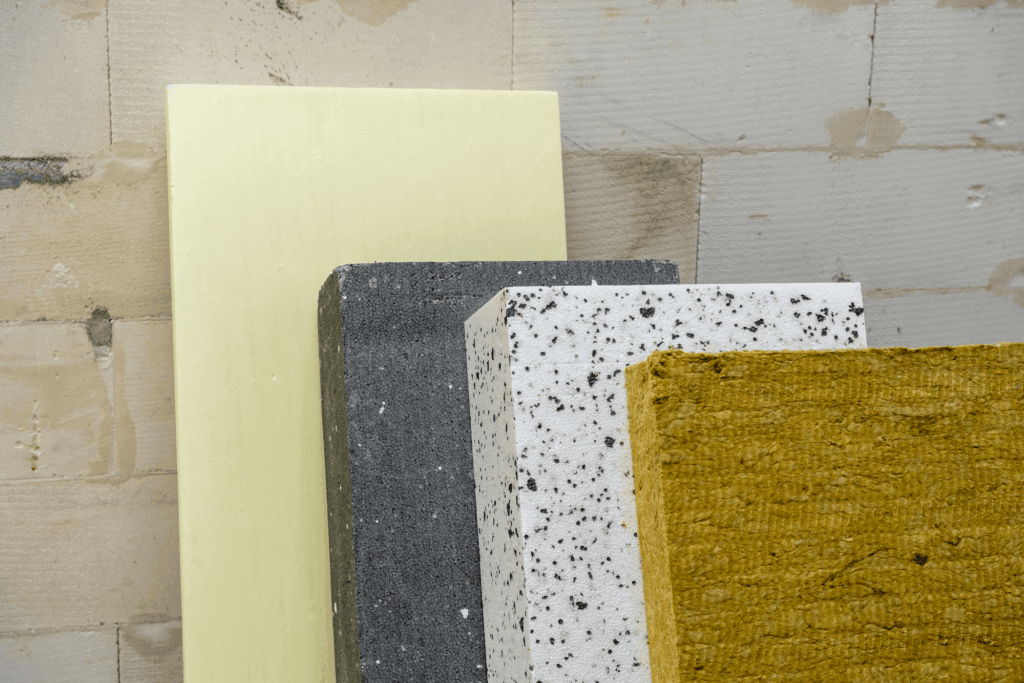
Modern foam adhesives for thermal insulation are compatible with various insulation materials, including:
- White EPS boards
- Graphite EPS boards
- XPS boards
- PUR/PIR insulation boards
- Mineral wool (depending on product type)
If your major task is to insulate the façade we recommend selecting a foam adhesive dedicated for Styrofoam rather than a universal construction adhesive.
Depending on the product, you can insulate between 10-14 m² with one can.
How to Use Foam Adhesive for Styrofoam Step by Step
Step 1: Prepare the Surface Before Using the Foam Adhesive for Styrofoam
Before starting:
- Remove dust, dirt, grease, and loose particles.
- Ensure the substrate is stable and load-bearing.
- Check that the wall is dry.
Should You Prime the Wall Before Using Foam Adhesive for Styrofoam?
It depends.
In most cases, foam adhesive can be applied directly to a properly prepared substrate without priming. However, the wall should first be assessed carefully.
Priming is recommended when the substrate is:
- Very dusty or loose
- Highly absorbent
- Weak or unstable
A suitable primer helps reduce and equalize absorption, bind residual dust, strengthen the surface, and improve adhesion.
However, the substrate should always be clean and free from loose particles before priming – even the strongest adhesive won’t provide a durable bond if applied to dirt, dust, or an unstable surface.
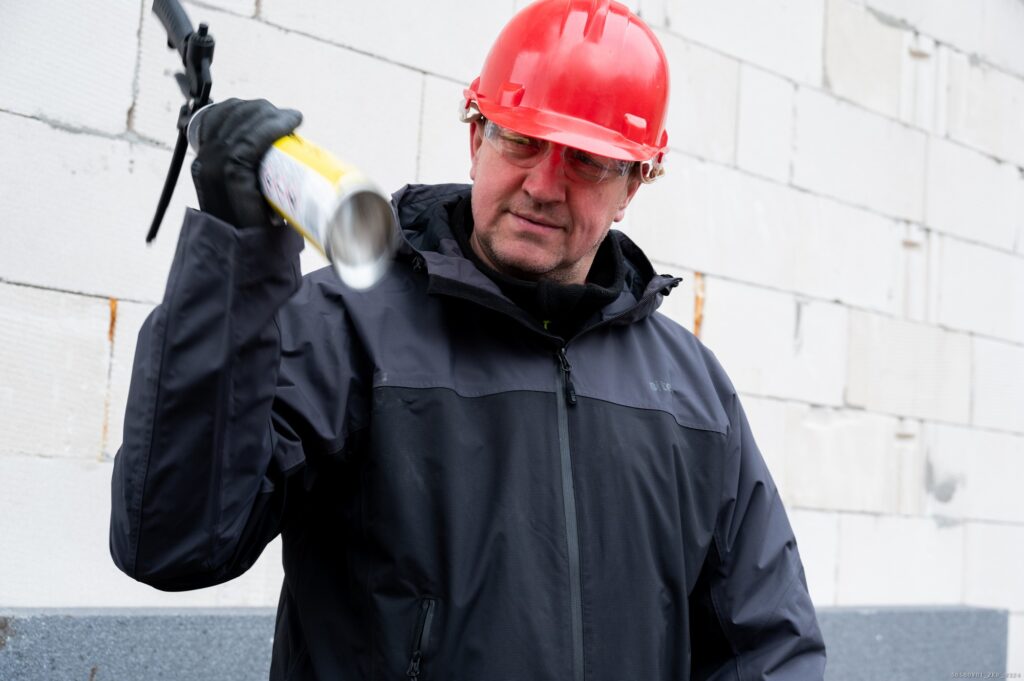
Step 2: Shake the Can Thoroughly
Screw the gun on the can and shake it vigorously about 30 times before use.
This ensures proper mixing of all components and consistent foam structure during application.
Step 3: Apply the Foam Adhesive to the Styrofoam Panel
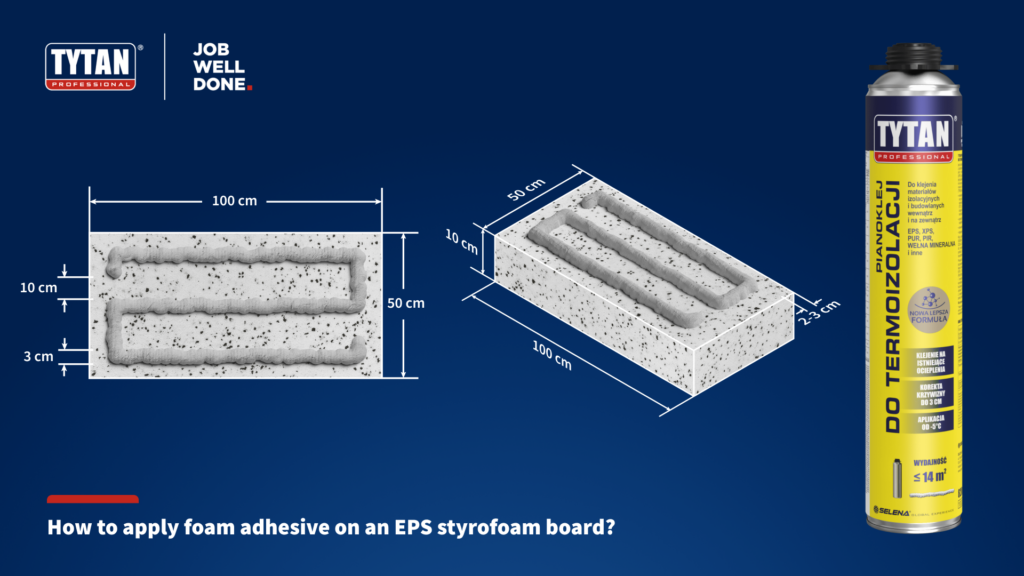
Apply the foam in an “S” pattern across the EPS board.
The “S” pattern allows for even adhesive distribution and optimal bonding performance. This application method is recommended for both EPS and mineral wool boards.
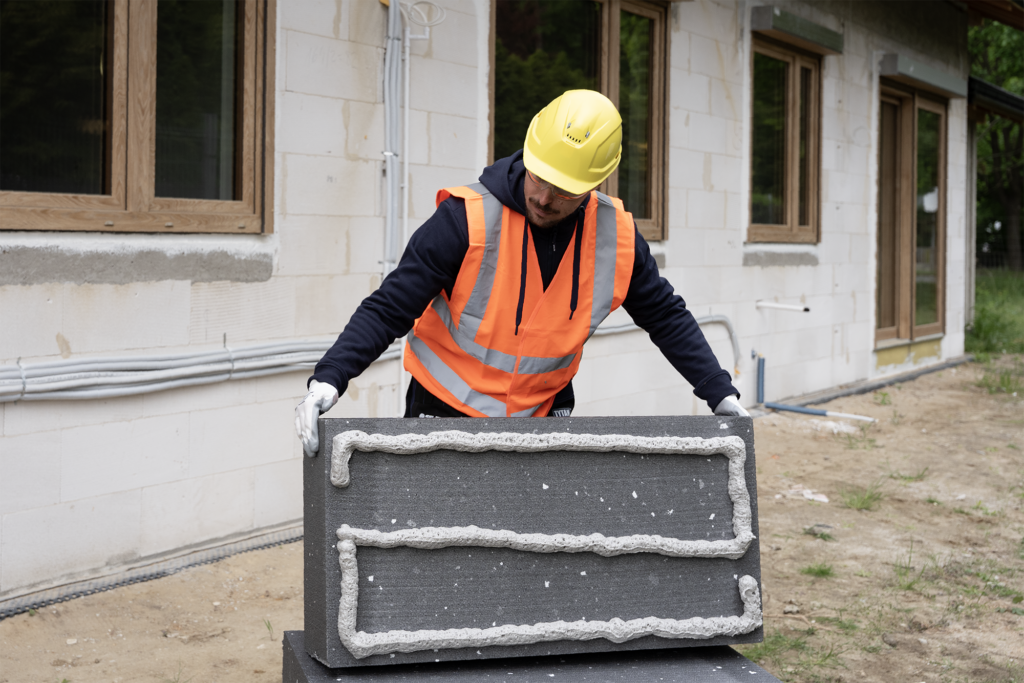
Hold the gun tip 1 cm above the insulation panel and apply the 3 cm wide foam bead. The braid should be 3 cm away from the panel edge.
Step 4: Position the Styrofoam Panel on the Wall
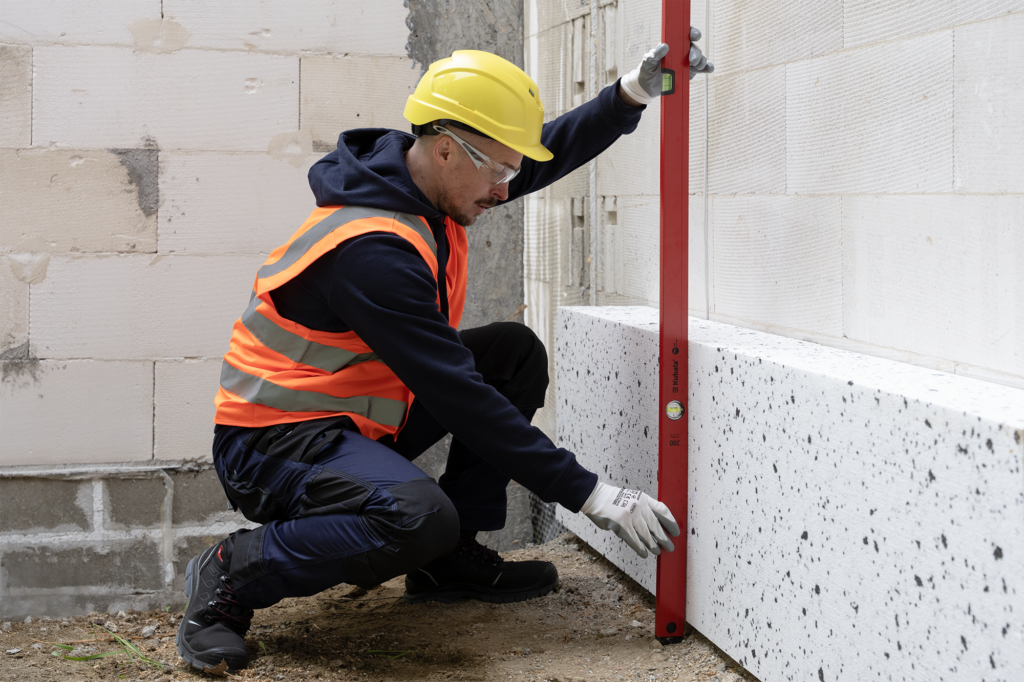
Place the aluminum starter track at the bottom of the wall. Start pressing the panels against the wall and use a long spirit level to make any necessary adjustments.
Most insulation foam adhesives allow corrections between 5-15 minutes, depending on the product.
Step 5: Continue Work After Initial Curing – Mechanical Fixing After 2 hours!
How long does the foam adhesive cure? One of the major advantages of foam adhesive is speed.
With many insulation foam adhesives:
- Mechanical fixing can begin after approximately 2 hours!
- Full curing is achieved after ~24 hours.
Traditional cement adhesives typically take between 24 and 72 hours to begin mechanical fixing, and 28 days to fully cure. The difference is enormous.

Key Takeaways
Foam adhesive has become the preferred solution for many insulation professionals because it simplifies installation while maintaining excellent performance. Compared to traditional cement mortar, it eliminates mixing, reduces mess, shortens installation time, and allows work to continue much sooner.